
Five Things Dolly Parton Knew About Legacy That Most of Us Are Still Learning
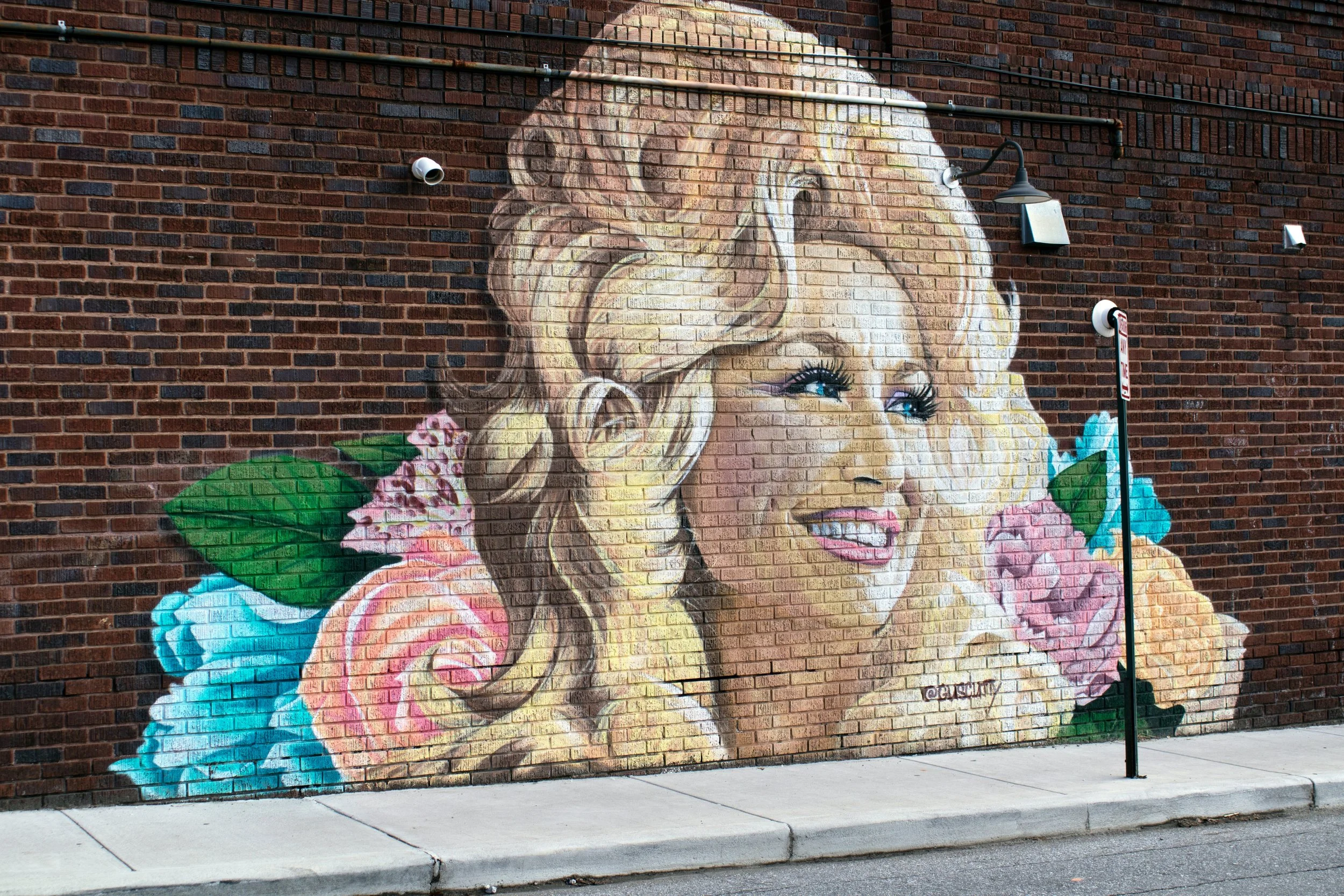
When Dolly Parton arrived in Nashville in 1964, the country music industry grossly underestimated her appeal and her business savvy. Fred Foster signed her to his Monument record label, but he pushed her towards pop music instead of country, despite her objections that country music was where she belonged and where she would excel. In an industry heavily favored toward male voices, Mr. Foster did not see her as a country music entertainer. Two years later, Dolly had a country hit written by Curly Putman that forecasted who Dolly was and who she would become: “Just because I’m blonde, don’t think I’m dumb / ‘Cause this dumb blonde ain’t nobody’s fool” in the song “Dumb Blonde” on her debut album.
With five distinct characteristics that reflect Dolly's music and her character, Dolly became a powerhouse entertainer and humanitarian.
1. Pride – the care and consideration for your work in such a way as to acknowledge, understand, and demonstrate the responsibility that it carries
Dolly took great pride and care in her music and her appearance. Even in the smallest detail of maintaining her image to fans, she went to bed in full make-up and hair on the west coast in the event she needed to evacuate in the middle of the night in an earthquake. Jane Fonda even noted that in staying with Dolly for weeks in her home and on her tour bus, she never saw Dolly in any other way than we all saw Dolly. Dolly continually looked for ways to illustrate her faith and use her platform as a country music artist to help others. In 2016, she immediately stepped in the aftermath of the wildfires near her childhood home and contributed $1,000 per month via the My People Fund for people whose homes had been uninhabitable because of the fires. She created Dollywood as a tourist destination that would employ so many people who may not have found meaningful, sustainable work locally otherwise.
Dolly never once forgot that others depended on her to be who she was and who she aimed to be. She responded to that call in her actions and in the song “When Life Is Good Again,” which she wrote in response to the pandemic, the same crisis that led her to donate $1 million toward vaccine research.
“I’ll try to be someone on which you can depend, a helping hand to lend. Let’s open up our eyes and see what’s goin’ on.” – “When Life Is Good Again”
2. Prescience – the ability to show foresight in assessing risk and opportunity
Dolly always knew her best bet was herself, and she made winning bets on Dolly time and time again. When she left home for Nashville at 18 years old, she left knowing via her own instincts that she was going to be a country music star. With a strong television presence as Porter Wagoner's duet partner on his show and three hits, she left the show to pursue a solo career. This had been done by her predecessors, who may have had a hit or two but never reached the stardom that they had enjoyed with Porter. Dolly made the bet anyway and used the song “I Will Always Love You” to soften the blow for Porter Wagoner. While she had the opportunity for Elvis to record that song, which would have guaranteed the song's success decades earlier, Dolly declined in order to keep the songwriting rights. That was an incredibly bold move in 1974 for a woman, and it paid off 18 years later when Whitney Houston recorded it and generated $10 million in royalties. Dolly used that money to invest in a historically Black neighborhood in Nashville, calling it the “house that Whitney built.”
Dolly knew the costs of a losing bet. She had lived in extreme poverty throughout her young life, but from those humble beginnings, she also learned her own true value and the cost that would come from discounting that value, even when an opportunity like Elvis seemed too good to pass. Dolly used the bad times as the launch pad for the good times for herself, her family, and her people.
“No amount of money could buy from me the memories that I have of then… In the good old days, when times were bad.” – “In the Good Old Days (When Times Were Bad)”
3. Positioning – the knowing where you belong even if it may not be obvious
Country music artists did not typically become movie stars until Dolly broke that mold. After hearing one of Dolly's songs, Jane Fonda felt that Dolly understood people in a way that would translate to acting and advocated for her to appear in her upcoming film 9 to 5, which already had a star-studded cast including Lily Tomlin and Dabney Coleman. Dolly was reluctant at first, since this was not her typical stage. She acquiesced after making the deal that she could develop the film's theme song. When Jane and Lily heard Dolly's nails tapping out the song's rhythm as it mimicked typing, they instantly knew that Dolly was indeed the right choice and that the song was not just part of a film score – it was a generational anthem. The Golden Globe and Oscar nominations for the song confirmed that Dolly was as natural on the screen as she was at the Grand Ole Opry. Dolly's status as the Queen of Country Music has been confirmed over decades of her career and by the recently announced plan to rename the Nashville airport in her honor.
Dolly never tried to pretend to be something she was not, but she was also strong enough to stretch her butterfly wings and evolve into new versions of herself that stretched her talents and how the world saw her.
“Gentle as a sweet magnolia, strong as steel her faith and pride.” – “Eagle When She Flies”
4. Praise – highlighting the accomplishments of others
While Dolly may have been a solo artist for most of her career, she was always eager to support other artists and give credit to the people around her that contributed to her success. She employed family members in various roles and often had them on stage with her singing. She consistently and frequently praised the team of people that helped her with her hair, make-up, and wardrobe. She never saw up-and-coming artists, especially female country music artists, as competition, but instead used her spotlight to shine it upon them and advocate for their inclusion in the country music industry. Dolly also credited God for her talents and evangelized her faith in ways that resonated with almost everyone.
Dolly saw that true power came from collaborating. She never shied away from a duet or singing harmony, so someone else could have the melody. She instinctively knew that the pot of gold at the end of the rainbow had gold, lucky pennies, and four-leaf clovers that were much better shared than hoarded, so she shared.
“Together, you and I can stop the rain and make the sunshine. Paint a pretty rainbow brushed with love across the sky together.” – “Together You and I”
5. Provenance – traceable, verifiable history behind the commitment
Dolly's capacity for seeing others' needs did not start when she became a big star. It was part of who she was even as a young girl. She often told the story of a particular Christmas where the church would distribute small gifts, likely hard candy, to the women and children, so they would have some kind of gift at Christmas. Dolly and her siblings each got a small gift, but when they got to Mrs. Parton, the woman handing out the gifts turned to Dolly's mother with a smile, gently suggesting that surely she didn't need one more gift for herself when so many of her own children had already received one that day. Dolly sensed the injustice and insensitivity that wounded her mother and offered to give away her own gift. It was likely not the first time and definitely not the last time that Dolly gave away a gift in service to others. Her own charitable organization, Imagination Library, was a tribute to her father, who remained illiterate. Millions of children have books and read in large part because of Dolly's efforts. She could take a hard candy gift and turn it into a magnitude of blessings.
“Lord, it’s like a hard candy Christmas, I’m barely getting through tomorrow. But still I won’t let sorrow bring me way down. I’ll be fine and dandy.” – “Hard Candy Christmas” (written by Carol Hall)
The earthly loss of Dolly Rebecca Parton this past week is bittersweet. Country music will continue to highlight faith, heartbreak, and hard work in storytelling and musical notes that have you tapping and clapping, but Dolly's unique voice will be missing. Her business savvy and the path that she created for artists to follow onto the charts, into Hollywood, and as activists making the world better will establish a new standard for country superstars, but she will no longer be the bigger-than-life megastar announcing new funding in the parking lot of a Walmart.
I imagine that Dolly would like to be remembered as she wrote in “Eagle When She Flies,” and try to model that: “You will keep her in your vision, but you will never keep her down.” May she rest in her rhinestones with Carl watching her backstage, and may we all be a little bit more like Miss Dolly.
Fullanthropy Perspective:
Dolly Parton never used the word “philanthropy.” She used words like faith, family, and gratitude. But look closely at the five traits behind her life's work — Pride, Prescience, Positioning, Praise, and Provenance — and you'll find a working legacy framework that most nonprofit leaders spend careers trying to build deliberately.
Legacy isn't a strategic plan. It's a pattern of small, deliberate choices, repeated consistently, until the whole world can see the shape of them. Dolly lived that. The organizations and donors who follow her lead will build a legacy on purpose and, like her, leave this world slightly better than they found it.
If you would like to honor and celebrate Dolly's legacy, please make a gift to Imagination Library.