
Sea Turtles and Mission: Slow and Steady Transformational Beneficial Change
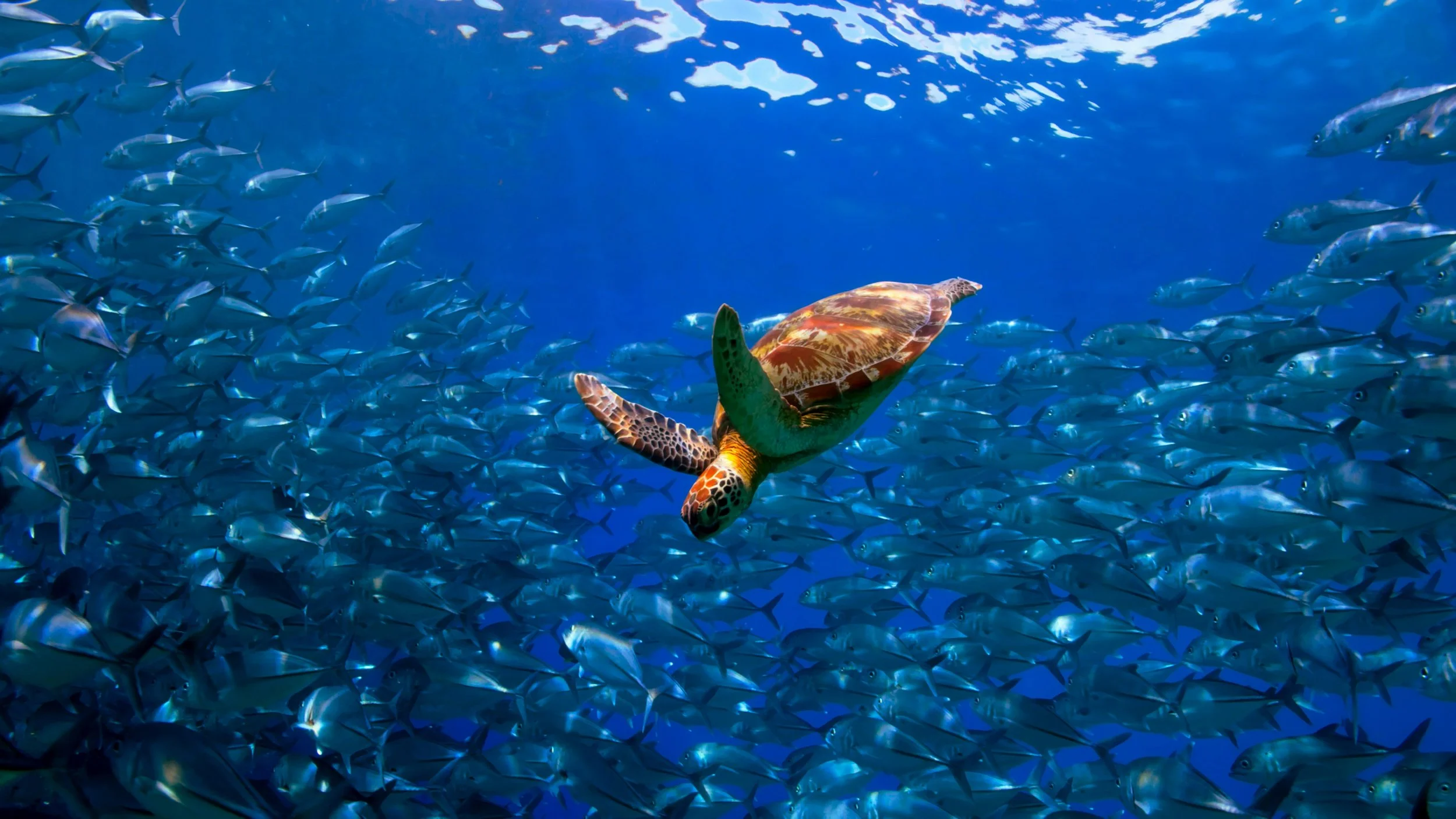
The word mission, while now permeating the business community, has been a driving force in nonprofit operations from the beginning. For a nonprofit, all operations, communications, and funding stem from mission. The universal mission of any nonprofit is to transform humanity in some way, which is infinitely more challenging than the private sector’s primary mission of making a profit. Government’s mission of serving the largest number of people as well as possible is slightly more challenging, but it still does not compare to the purpose of 1.9 million US nonprofits, whose missions vary widely but ultimately seek to end suffering or promote beauty and good. Because the mission defines a nonprofit organization without a lot of fanfare, the sea turtle, the Fullanthropy icon for mission, quietly and similarly creates a tremendous impact on the ocean ecosystem and land in actuality and mythologically.
Sea turtles are critical to the overall health of our marine ecosystem in multiple ways. Through their consumption of sea grass and for Hawksbill sea turtles, sponges within coral reefs, they maintain the ocean’s biodiverse ecosystem, which ensures habitats for micro-organisms and the health of coral reefs. Beyond balancing the ecosystem through their food choices, sea turtles through their ability to travel thousands of miles also provide a food source and mobile habitat for algae and barnacles, which are food sources for small fish. Even in nesting on beaches, sea turtles nesting habits of digging holes for their eggs on beaches simultaneously aerates and fertilizes beaches ensuring healthy coastal areas. Sea turtles also feed on jellyfish, generally destructive marine life, preventing their overpopulation.
In the same way that sea turtles protect our oceans, nonprofit missions quietly and with little to no fanfare ensure the continued health and progress of humanity in society. The ordinary diligence and capabilities inspire confidence among the general public with Independent Sector noting that 57% of Americans have a high trust of nonprofits. Nonprofits fill gaps in niche markets that government cannot efficiently and economically address. They also take on necessary projects for the betterment of mankind that will never yield a significant economic return. In the same way that sea turtles use their hard shell to provide a mobile habitat and care for the essential but less glamorous elements like the sea’s garden, nonprofits provide a safety net of care for the least among us. Similar to sea turtles’ removal of destructive jellyfish, nonprofits attempt to eradicate suffering in our world via prevention programming and shelters.
Beyond their key purpose in maintaining the ocean’s ecosystem, sea turtles have unique characteristics. Sea turtles have the ability to sense the Earth’s magnetic field, they have internal compasses that enable them to return to the beach, where they were born, even many years after their birth to release their eggs into nests. While other animals including dogs have elements of magnetoreception, they cannot be as precise or cover the distance that sea turtles do. Sea turtles also have the ability to swim at depths of up to 3000 feet, which is nearly triple the deepest a fully equipped diver has ever reached. They also possess incredible adaptability as one of the oldest species by inhabiting the earth for more than 110 million years, which places them in the era of the dinosaurs. On average, sea turtles live long lives 80 to 100 years, which speaks to their adaptability.
Collectively, nonprofits replicate many of these sea turtle characteristics. Like the precision with which sea turtles can navigate the ocean, nonprofits craft distinct solutions not available in other sectors for society’s problems resulting in measurable societal transformation. Nonprofits dive deep for solutions by taking on challenges that others dismiss as impossible to solve like the eradication of poverty; mistreatment of children and animals; conservation of the world’s land and marine masses; and even world peace. In solving these complex issues, nonprofits must remain nimble and consider all options and possibilities. This adaptability has resulted in longevity, particularly in the United States, where nonprofit and civil organizations pre-date the nation’s birth.
Beyond the science that heralds the power of the sea turtle, there is significant spiritual and mythological evidence that proclaim the authority of the sea turtle. Given their amphibious nature, sea turtles are the creatures within several cultures like West African and Native American that serve as ambassadors between the sky and water worlds with the ability to cross back and forth without being destroyed. Chinese culture identifies them as emblems of successfully navigating life’s changes. In folklore, the turtle symbolizes good luck, good fortune, and prosperity. The Chinese consider turtles one of four sacred animals and a symbol of wealth. Within Polynesian societies, turtles represent endurance and abundance, because of their ability to navigate long distances safely. In Native American spirituality the sea turtle carries Earth on his back resulting in Earth especially North America referenced as Turtle Island. Sea turtles have become powerful symbols of purposeful positive change and ongoing prosperity,
Nonprofits are the catalysts for the transformation of society. Just as the sea turtle accumulates long distances through steady progress, nonprofit missions alter people and societies into something better in small, steady steps that create impact rather than dramatic changes. Collectively, nonprofits contribute to US economic prosperity with 5.5% of the US gross domestic product or $1.4 trillion and 12.8 million jobs. For context, Amazon contributes $1 trillion and five million jobs. Scientists cite declining sea turtle populations as an indicator of poor ocean health. The National Institutes of Health credit large numbers of nonprofits and social service organizations in a community as improving the overall health of a community.
Navigating with an internal compass toward something specific across vast distances without the need for recognition is the calling of both sea turtles and nonprofit leaders. Both continue forward regardless of climate conditions purposefully and intentionally. That determination in the face of challenges occurs because both know the destination and understand why it is so important to get there. Arrival at the destination creates a myth of simplicity that belittles the constant and tenacious spirit that compels the journey for both.
The Fullanthropy Perspective: Navigate by Mission
The sea turtle does not consult the current before committing to the journey. It moves with the certainty of an internal compass built over two hundred million years of purpose. The strongest nonprofit missions operate the same way — proactively, with focus, and without waiting for ideal conditions. When your mission is that clear and that anchored, donors, board members, and advocates find their way to you the same way the sea turtle finds its way home.
Ready to build the organization the money cannot resist? Let's talk.